
Image
STS News Banner

Top News Story: A Special CNN Report 

In a new CNN article, Dr. Jessica Donington, STS second vice president, and Dr. Chi-Fu Jeffrey Yang help debunk seven common misconceptions about lung cancer, highlighting the lifesaving impact of early detection and surgical care. STS continues to advocate for expanded screening access and updated eligibility criteria so more patients can be diagnosed earlier. Read the article

Science Spotlight

Tsuyoshi Kaneko, MD, vice chair, STS Council on Education, discusses the growing importance of long-term evidence in the management of aortic valve disease.

Intraoperative sampling of lymph nodes is recommended during resection of early-stage non-small cell lung cancer. Here, the authors compared nodal upstaging and major morbidity and mortality rates between varying strategies.

Surgeon Spotlight

Life as a Surgeon and a Parent

Caption

Mentorship and the Future of Cardiothoracic Surgery 

Latest News and Insights

Image
Leadership Institute blog by Dr. Evan Alicuben
Entering into the STS Leadership Institute, I had two main goals:build relationships with other surgeons that share common leadership interests and hone a broad skill set that can be used in future leadership positions.
3 min read
Evan Alicuben, MD

The ongoing opioid crisis has led to a marked increase in tricuspid valve endocarditis (TVE), particularly among people who inject drugs (PWID). This trend presents cardiac surgeons with complex clinical and psychosocial challenges, as patients often face overlapping issues—including infection, addiction, and social instability. These factors complicate surgical decision-making and underscore the need for comprehensive, multidisciplinary approaches to care.

To address the lack of clear surgical guidance and the unique challenges associated with TVE in PWID, the Society of Thoracic Surgeons (STS) convened a multidisciplinary panel to develop expert consensus statements focused on clinical decision-making in this high-risk population.

“Unlike left-sided endocarditis, TVE lacks definitive data to guide surgical timing and intervention strategies,” said Joshua Goldberg, MD, of Weill Cornell Medicine, who chaired the task force that produced the document. “This consensus document represents an important step forward, organizing expert recommendations into key categories that reflect the multifaceted clinical challenges encountered in managing PWID with TVE. Each group of statements addresses specific, real-world dilemmas faced by the multidisciplinary care team.”

The eight core categories outlined in the document include:

  • Vegetation size
  • Influence of microbial organism on surgical decisions
  • Management of persistent bacteremia and timing of antibiotics
  • Prosthetic valve infection
  • Decisions around valve removal, repair, or replacement
  • Prosthetic type selection
  • Use of emerging technologies such as transcatheter debulking
  • Ethical challenges of recurrent disease in the context of substance use

A Thorough, Multidisciplinary Approach to Consensus Building

The STS writing group employed a rigorous, evidence-based methodology to develop the consensus statements, incorporating a comprehensive literature review and a modified Delphi process. The evidence review was guided by PICO Framework (Patients/Population, Intervention, Comparison/Control, Outcome)-formatted questions, ensuring a structured and focused appraisal of the data. Consensus statements were established in the first round of voting, with a minimum threshold of 75% agreement required from a multidisciplinary panel that included cardiac surgeons and infectious disease specialists

Navigating Complex Decisions in Endocarditis

“First, surgeons and treatment teams must always remember that tricuspid endocarditis in the setting of injection drug use is a symptom and sign of the disease of addiction. Effective care requires addressing both the infection and the underlying pathology of addiction,” said Dr. Goldberg. “Second, published surgical indications for tricuspid valve surgery are largely extrapolated from data derived from studies on left-sided valve disease. When combined with complex psychosocial factors, the decision to operate can be enigmatic and is best approached through thoughtful, multidisciplinary evaluation.”

A Practical Framework for Attentive, Evidence-Informed Care

Ultimately, this expert consensus provides cardiac surgeons with a practical, evidence-informed framework for managing TVE in PWID. It supports individualized decision-making while promoting standardization in key areas such as vegetation assessment and the use of emerging technologies. Most importantly, it emphasizes the need for compassionate, team-based care that integrates medical, surgical, and psychosocial perspectives. The document serves not only as a clinical tool, but also as a call to action—to treat not just the infection, but the patient as a whole.

In addition to offering clinical guidance, the consensus highlights critical knowledge gaps that demand further investigation. “Because published surgical indications are largely extrapolated from studies on left-sided valve disease, the true indications and optimal timing for intervention remain unclear—particularly in the absence of uncontrolled sepsis or right heart failure,” Dr. Goldberg noted. “We also lack a clear understanding of the efficacy and utility of transcatheter therapies, which have seen a dramatic rise in use in recent years.”

Read the Annals article.

Jul 20, 2026
3 min read

“The Society of Thoracic Surgeons applauds the House bipartisan Doctors Caucuses for their leadership in developing the Patients First Act,” said STS President Vinay Badhwar, MD. “STS has worked closely with members of the caucuses throughout this process, and we are encouraged to see several longstanding physician priorities reflected in the legislation.

In particular, we appreciate the inclusion of meaningful reforms to Medicare's budget neutrality policies and provisions based on the Access to Claims Data Act—legislation developed with strong input from STS to improve physicians' access to timely, comprehensive Medicare claims data.

These policies represent important steps toward a more stable and transparent Medicare payment system that better supports physicians and the delivery of high-quality patient care. We look forward to continuing to work with Congress to advance these reforms and strengthen the Medicare program for both patients and physicians."

Jul 17, 2026
1 min read

This afternoon, the Centers for Medicare & Medicaid Services (CMS) released the Calendar Year (CY) 2027 Medicare Physician Fee Schedule (PFS) proposed rule. STS has put together a summary of key provisions affecting cardiothoracic surgery in the rule.  

Physician Payment

As required by statute starting in CY 2026, there are two separate conversion factors (CFs): one for physicians and practitioners participating in qualifying alternative payment models (or QPs) and one for those who are not (non-QPs). For CY 2027, CMS has proposed a conversion factor (CF) of $32.84 for non-QPs and $33.16 for QPs.  

While this is the second year in a row we are seeing base CF updates, as required by statute, the conversion factor for physicians will actually decrease due to the expiration of the temporary 2.5 percent increase for CY 2026, even though the formula incorporates positive base updates.

Additionally, other policies continue to diminish hospital-based proceduralists’ reimbursement. Policies such as the efficiency adjustment and reductions to practice expenses continue to threaten surgeons’ ability to practice.  Reimbursement also continues to lag inflation. STS is working with the broader physician community and members of the Republican and Democratic Doctors Caucuses to reform physician reimbursement.

Surgical Global Codes

CMS continues to question the valuation of 10- and 90-day global surgical codes. While it does not make any proposal to conduct an across-the-board revaluation at this time, CMS states that it is interested in how “CMS could 'right-size' payments for the globals over time to ensure they remain aligned with current clinical practice and resource costs, are more readily updated based on empirical data, and do not obscure differences in cost and value across settings of care.” STS has consistently pushed back against efforts to reduce payments in surgical global periods, advocating for accurate valuation of surgical services and policies that reflect the complexity, intensity, and longitudinal care provided by cardiothoracic surgeons.

Quality Payment Program (QPP)

CMS is proposing to sunset the traditional Merit-based Incentive Payment System (MIPS) reporting option in 2029 and is pushing forward with its efforts to transition all MIPS participants towards MIPS Value Pathways (MVPs), which will be reported by subspecialty.

Inpatient Only (IPO) List in Hospital Outpatient Rule

CMS also recently released the CY 2027 Hospital Outpatient Prospective Payment System (OPPS) rule. Hospitals that meet their outpatient quality reporting requirements will receive a 2027 payment increase of 2.4%.

Additionally, CMS has long maintained an Inpatient Only (IPO) list identifying services that are not payable under the OPPS because they must be performed on an inpatient basis. In last year's rulemaking, CMS finalized the elimination of the IPO list over three years, suggesting it gives physicians greater flexibility in determining the most clinically appropriate site of care.

As codes are removed from the IPO list, CMS is pricing them for reimbursement in the hospital outpatient and Ambulatory Surgical Center (ASC) settings. Removal from the list does not mean that the procedures cannot be performed in the hospital inpatient setting, only that, if safe for the patient, they may now be performed in and paid for in the outpatient or ASC setting.

CY 2027 marks the second year of this transition. Of particular interest to STS members, CMS is proposing to remove services from the respiratory, mediastinum, diaphragm, digestive, lymphatic, and endocrine clinical families, which include virtually all of the general thoracic procedures. Removal from the IPO list does not require that surgeries for Medicare patients be performed in the outpatient setting.

However, STS continues to have significant concerns that removal of CT surgery from the IPO list could impact patient safety and result in other insurers dictating where surgeries are performed without proper safeguards or clinical input.

Jul 14, 2026
3 min read
A discussion on multidisciplinary management of malignant airway obstruction, including preoperative planning, postoperative airway care, and the value of multidisciplinary tumor boards and real-time collaboration.
50 min

In this episode, co-hosts Dr. Sara Pereira and Dr. Ian Bostock celebrate the 20th anniversary and impact of the STS Looking to the Future (LTTF) Scholarship Program by speaking with three rising stars pursuing careers in cardiothoracic surgery: Tyler Wilson, MD, a general surgery resident at the University of Chicago; Molly Shields, MD, a general surgery resident at Walter Reed National Military Medical Center; and Tyrone Hill, a medical student at Meharry Medical College.

52 min
Image
Career Development blog by Dr. Melanie Subramanian
With its initial release in 2023, the Society of Thoracic Surgeons Compensation Survey represents one of the few formal, comprehensive reports on provider compensation published by a subspecialty surgeon group. Now in its third iteration, the 2025 survey continues to shed light on trends in cardiothoracic surgery compensation and provides granular information on demographics, experience level, productivity, and practice type.
4 min read
Melanie Subramanian MD, MPH

In Part 2 of Thinking Thoracic's annual review of the year's most influential thoracic oncology research, Drs. Jeff Yang and Linda Martin examine practice-changing studies in perioperative care, lung cancer treatment, and multidisciplinary cancer management.

The discussion covers emerging evidence on cryoanalgesia, preoperative fasting, targeted therapies for EGFR-mutated lung cancer, and other key clinical trials and consensus recommendations that are influencing patient care today.

25 min

In Part 1 of this special Thinking Thoracic episode, Dr. Jeff Yang welcomes Dr. Linda Martin for a discussion of groundbreaking research spanning immunotherapy, lung cancer epidemiology, and screening. Together, they explore emerging organ-preserving strategies for mismatch repair-deficient cancers, the growing population of patients with lung cancer who have never smoked, and new data highlighting opportunities to improve screening eligibility and uptake.

55 min

Browse News By Topic

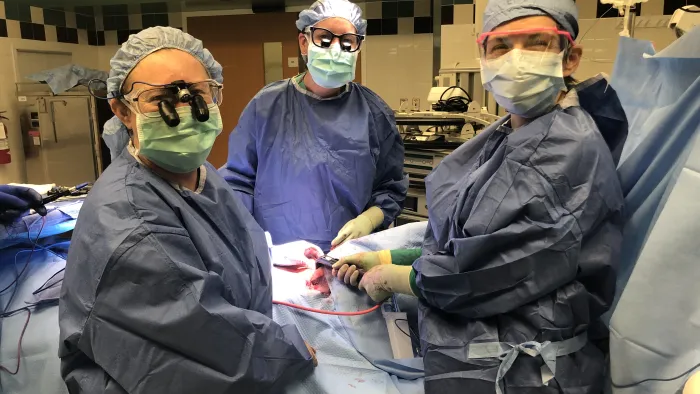
Dr. Sharon Ben-Or and her surgical team.

Member News

Learn about member experiences from your specialty, and stories about the ever-evolving landscape of cardiothoracic surgery.

View >

A view of a laboratory.

Technology

Learn about science, technology, and date-driven tools made possible by the STS National Database.
View >


Dr. Ourania Preventza with mentees.

Advocacy

Learn about Leadership, Advocacy, and Regulatory Action; you and your colleagues are taking steps to drive change in healthcare institutions and on Capitol Hill.

View >


The STS Blog

From career advice to expert perspectives illuminating the latest findings in the media, STS authors share their insights and experience.

View Blogs


Press Releases

News and announcements for cardiothoracic surgery, the health care press, and the public.

View Press Releases


STS News

The Society’s quarterly magazine brings you the latest CT surgery news, research, advocacy updates, surgeon stories, and more.

STS 2026 Preview    Summer 2025     Spring 2025     Winter 2025   


For Media Representatives

All media inquiries, including requests for interviews with leading experts in cardiothoracic surgery.

Learn more


Share Your News and Stories 

STS wants to hear from its members and share their news and stories with others. Working on new research or an innovative initiative? Making an exciting career move? Receiving a promotion? Honored with an industry award?  Send us an email at stsnews@sts.org.