This 30-minute session expands on the STS Roadmap to Mobile Lung Cancer Screenings and examines the intricacies of mobile cancer screening units and how they operate. The event is open to all interested in creating or expanding a mobile cancer screening initiative at their institution.
Moderator
Elliot L. Servais, MD Lahey Hospital & Medical Center Burlington, MA
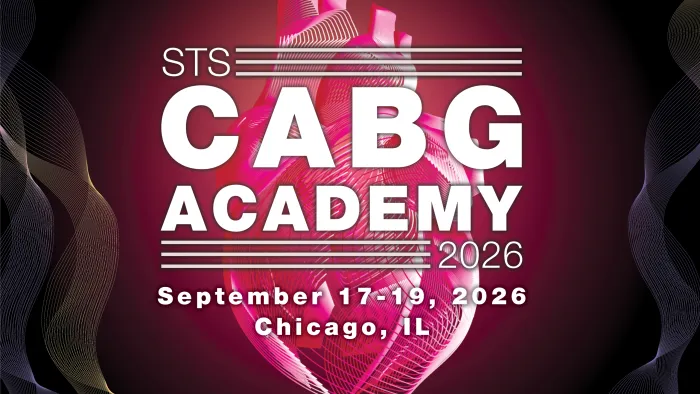
More than 200 cardiac surgeons gathered in Chicago for a successful STS Coronary Conference, June 12-14, 2025. Attendees enjoyed a hands-on Training Village, two days of didactic lectures, original abstracts, scientific posters, plus networking and mentorship.
In this episode of Thinking Thoracic, Dr. Elliot Servais, Lahey Hospital & Medical Center, joins host Dr. Erin Gillaspie to share how he developed a robotic 1st rib resection program. Initially trained in the traditional transaxillary open approach, Dr. Servais was candid about his early reluctance to take on these technically challenging cases. That changed when he saw the potential of a minimally invasive, robotic technique that aligned with his existing surgical skill set. Recognizing an unmet need at his institution, he seized the opportunity to build a dedicated program.
The 2025 STS Leadership Institute meeting held in Chicago was a fantastic experience that far exceeded my expectations. I was not only able to network and get to know many people in the field, but was also able to take away many lessons that helped me to determine the path I would like to take to become a better leader as I grow and mature as a surgeon.
In this episode of Thinking Thoracic, hear from Christopher Seder, MD, professor of surgery and chief of the thoracic surgery division at Rush University, and Robert Habib, vice president of research and analytics at STS, about the development of the Society’s short-term risk calculators for pulmonary resection and esophagectomy, powered by the General Thoracic Surgery Database with more than 800,000 pat
Starting your first job, or making your first move, as a cardiothoracic surgeon is a big step. The right decision can shape your professional and personal life for years to come. You would prefer not to be that person who makes the wrong choice and who bounces from wrong job to wrong job for the next 10 years.
The 2025 STS Coronary Conference was held from June 12–14 in Chicago, bringing together more than 200 healthcare specialists from around the world. This three-day event was delivered groundbreaking insights and hands-on training for professionals involved in coronary surgery. “More and more, the concept of a coronary surgery specialist is emerging, and this conference supported that development by providing the education needed to acquire and validate the relevant skills and knowledge at each surgeon’s institution,” said co-course director Marc Ruel, MD, of the University of Ottawa Heart Institute.
Image
New for 2025, the Training Village offered attendees hands-on opportunities to build their skill set.
The conference featured a comprehensive program that focused on advanced surgical techniques, minimally invasive methods, and the latest technological innovations in the field. Attendees engaged with leaders in cardiothoracic surgery through lectures, panel discussions, and collaborative learning activities.
Each day included expert-led sessions covering a wide range of topics, including radial artery and BITA grafting, evidence-based practices, and technical pearls in coronary surgery. Participants also attended sessions on academic career development and minimally invasive, hybrid, and robotic CABG techniques. Highlights of the conference included keynote lectures, interactive case discussions, and surgical video presentations that allowed attendees to explore complex intraoperative and postoperative decision-making strategies in greater depth.
Image
Between sessions, attendees explored poster presentations and visited industry exhibits.
A key feature of the event was the introduction of the Training Village, a non-CME, hands-on learning space that featured cutting-edge surgical simulations and demonstrations and allowed attendees to gain practical experience under expert guidance.
The Training VIllage was organized into three stations:
Anastomosis Masterclass, which focused on advanced anastomotic techniques
Flow Measurement & Quality Control, where attendees practiced using intraoperative assessment tools to improve graft outcomes; and
Atrial Fibrillation Treatment, which provided instruction on left atrial appendage clipping and intraoperative Maze procedures.
“The Training Village was a great example of the conference’s practical component—emphasizing ‘know-how’ and ‘how-to’ over abstract concepts or theory, if you will,” said Dr. Ruel.
Throughout the conference, attendees participated in a wide array of engaging sessions, such as "Mastering Coronary Surgery: Expert Techniques," "Making the Most of Your Conduits," and "Which Kind of Academic Surgeon Do You Want to Be?" These sessions focused on developing both technical skills and strategic thinking.
Image
Dr. Brittany Zwischenberger (left) and her father, Dr. Joseph Zwischenberger (right), both presented at the conference.
By the end of the conference, participants had expanded their clinical knowledge, honed their skills, and networked with peers and leaders in coronary surgery. “As both a moderator and presenter, I left feeling inspired by the exchange of ideas and the shared commitment to advancing progress in coronary surgery,” said Brittany Zwischenberger, MD, of Duke University.
A webinar series focused on topics relevant to general thoracic surgeons in the South Asian region, co-presented by the Society of Thoracic Surgeons, the Indian Society of Thoracic Surgeons & Trust (ISTST), and the Indian Association of Cardiovascular-Thoracic Surgeons (IACTS)