For Sean Jordan, MD, the need was clear: Too many patients across East Tennessee faced significant barriers to lung cancer screening—not because they lacked the need for screening, but because they lacked access to it.
East Tennessee has some of the highest smoking and lung cancer rates in the country, while screening rates remain below national averages. For patients in rural Appalachian communities, mountain roads, long travel distances, limited specialty care, and a lack of CT scanners in many counties can make screening especially difficult.
Image
Dr. Jordan is the co-director of thoracic oncology at UTMC.
Jordan, chief of thoracic surgery and director of lung cancer screening at the University of Tennessee Medical Center (UTMC), saw an opportunity to bring screening directly to the communities that needed it most.
The result is a 45-foot mobile CT lung cancer screening unit designed to serve patients across 21 counties in East Tennessee.
“We needed something that could navigate our geography and be convenient and inviting for patients,” Jordan said.
Making the Mobile Unit a Reality
Bringing the vision to reality required more than clinical expertise. It required funding, collaboration, persistence, and advocacy.
The University of Tennessee Medical Center already had a robust lung cancer screening program, but funding a mobile program presented a significant challenge. Working with Congressman Tim Burchett, the team secured $2.3 million through the U.S. Department of Agriculture to fund the mobile unit and supporting software.
The team then pursued a competitive Rural Health Resiliency grant through the Tennessee Department of Health to support program personnel. STS Advocacy strengthened the application by providing a letter of support from then-STS President Dr. Jenna Romano.
The effort ultimately resulted in a $5.45 million grant—one of the largest awarded in the state—to support personnel for the mobile lung cancer screening program and a mobile mammography program.
Jordan also credits Rob Headrick, MD, chief of thoracic surgery at CommonSpirit-Memorial Hospital-Rees Skillern Cancer Institute-Chattanooga and chair of the STS Workforce on Health Policy, Reform, and Advocacy, with providing guidance and connecting the team with STS Advocacy resources.
Bringing Screening to Patients
The mobile unit will bring CT screening and a multidisciplinary team—including technologists, nurses, patient liaisons, and behavioral health professionals—directly into underserved communities.
“Many patients are not willing to travel outside their communities to seek even basic care,” Jordan said. “We can bring our medical expertise and the CT scanner itself directly to their communities.”
The program will also provide tobacco cessation services, education, and centralized coordination to help patients who need additional care move through the health care system more quickly.
Ultimately, success will be measured by whether more cases of lung cancer are detected at an earlier, more treatable stage.
A medical oncologist once told him that fewer patients seemed to be arriving with stage II and III lung cancer. “That to me is the biggest win I can think of for this community,” Jordan said. “We are shifting the stage of lung cancer earlier to when it is most survivable.”
Leading Through Advocacy
The project took two years to move from funding to implementation, but Jordan hopes its impact extends beyond East Tennessee.
“Reaching out to other mobile lung programs and STS Advocacy can introduce you to a community of like-minded groups” who can share their experiences and help develop programs that work for individual communities, he said.
The experience reinforced Jordan's belief that thoracic surgeons should play a leading role in strengthening screening programs nationwide.
“Apart from patients and families, no one in the hospital sees the benefits of a robust lung cancer screening program as much as thoracic surgeons,” he said. “We should be leaders and advocates for strengthening our own programs and all programs nationwide.”
In this episode of the STS Thinking Thoracic podcast, host Dr. Jane Yanagawa is joined by Dr. John Mitchell—Chief of Thoracic Surgery at the University of Colorado and incoming Chair of the American Board of Thoracic Surgery (ABTS)—to unpack critical updates from the board.
These blogs, Cardiothoracic Surgery at a Crossroads and The Best of Cardiothoracic Surgery Is Still Ahead, offer two perspectives on the future of the specialty.
Over the past 25 years, Medicare physician reimbursement has fallen by approximately 33% after adjusting for inflation, even as the cost of delivering care has continued to rise. This widening gap threatens patient access to care, places increasing financial pressure on physician practices, and undermines the long-term sustainability of the physician workforce.
Host Dr. Melanie Edwards is joined by guest Dr. Andrea Wolf, director of the New York Mesothelioma Program, professor of thoracic surgery at the Icahn School of Medicine at Mount Sinai, chair of the American Association for Thoracic Surgery Wellness Committee, and an accomplished marathoner. Dr. Wolf explores how the mindset and discipline of distance running can strengthen resilience, performance, and career longevity in surgery.
In this episode of the STS Thinking Thoracic podcast, host Dr. Jeff Yang is joined by thoracic surgeons Dr. Seth Krantz and Dr. Christopher Seder, along with Harvard medical student Alexandra Potter, to discuss three landmark studies using the STS General Thoracic Surgery Database that are reshaping how lymph node evaluation is performed in lung cancer surgery. The panel explores current guidelines, quality standards, and how more comprehensive nodal evaluation can improve staging accuracy while maintaining patient safety.
Justine Varieur Turco has been appointed Chief Executive Officer/Executive Director effective Aug. 31, 2026. Turco brings more than 20 years of executive leadership experience in medical publishing, education, and professional societal leadership.
Latest Impact Factor places the journal first in the specialty and in the 95th percentile of surgery journals overall.
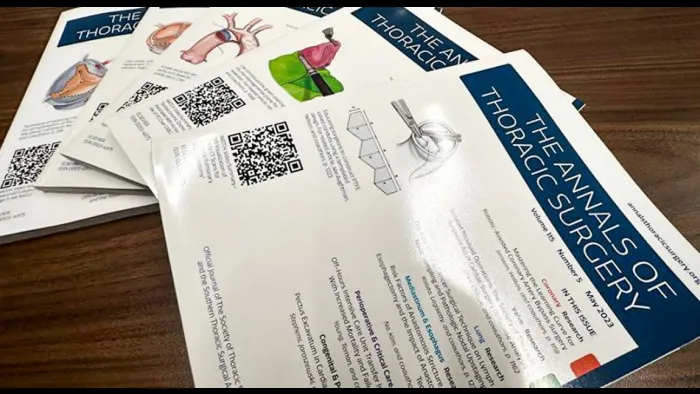
The Annals of Thoracic Surgery is now ranked first among cardiothoracic surgery journals based on the latest Journal Impact Factor. The ranking also places the journal in the 95th percentile of surgery journals overall and is the highest Impact Factor in its history.
The Journal Impact Factor is a widely used measure of how frequently on average articles published in a journal are cited by other researchers within two years of publication. It is among the most widely recognized of several indicators used to assess a journal's influence.
"It's a key milestone for the journal," said Editor-in-Chief Joanna Chikwe, MD, chair of the Department of Cardiac Surgery in the Smidt Heart Institute at Cedars-Sinai Medical Center. "For many years, The Annals has been the primary journal cardiothoracic surgeons tend to read and submit their work to. So, seeing it ranked first in the specialty is a great reflection of the quality of that work and the care that goes into the review process."
The editorial team receives more than 3,000 manuscript submissions each year. Fewer than 10% of original research articles are accepted for publication in The Annals, with approximately 15 to 20 appearing in each monthly issue following editorial assessment and scientific peer review. Dr. Chikwe said the ranking reflects the contributions of the journal's international community of authors, reviewers, and editorial board members.
"Peer review depends on people giving their time and expertise," she said. "Our reviewers help strengthen the science, our editorial board provides thoughtful guidance, and our authors choose The Annals for some of their most important work. This recognition belongs to that community of volunteers who make the journal possible while balancing busy clinical and academic careers."
The journal has also launched the Annals Peer Reviewer Academy, a mentorship program designed to train early-career cardiothoracic surgeons in scientific peer review. The inaugural program received over 45 applications for ~10 available spots.
In 2025, articles published in The Annals of Thoracic Surgery during the previous four years received approximately 13,000 citations. Based on those citation metrics, the journal also ranked ahead of leading journals, including JAMA Surgery.
"We'll continue to focus on publishing compelling research, guidelines, clinical cases and reviews across adult cardiac, thoracic, and congenital heart surgery," Dr. Chikwe said. " Our north star is contributing to better patient care, in a landscape that science and technology are transforming."
Top 10 Cited Articles from The Annals of Thoracic Surgery in 2025
Top 10 Cited Articles from The Annals of Thoracic Surgery
Rank
Article Title
Citations
Year
Vol (Issue)
1
EACTS/STS Guidelines for Diagnosing and Treating Acute and Chronic Syndromes of the Aortic Organ
103
2024
118 (1)
2
Perioperative Care in Cardiac Surgery: A Joint Consensus Statement by the Enhanced Recovery After Surgery (ERAS) Cardiac Society, ERAS International Society, and The Society of Thoracic Surgeons (STS)
90
2024
117 (4)
3
The Society of Thoracic Surgeons Intermacs 2023 Annual Report: Focus on Magnetically Levitated Devices
72
2023
117 (1)
4
The Society of Thoracic Surgeons Adult Cardiac Surgery Database: 2022 Update on Outcomes and Research
53
2023
115 (3)
5
The Society of Thoracic Surgeons Intermacs 2022 Annual Report: Focus on the 2018 Heart Transplant Allocation System
51
2023
115 (2)
6
Cardiac Surgery After Transcatheter Aortic Valve Replacement: Trends and Outcomes
48
2024
118 (1)
7
The Society of Thoracic Surgeons 2023 Clinical Practice Guidelines for the Surgical Treatment of Atrial Fibrillation
40
2024
118 (2)
8
Survival After Surgical Aortic Valve Replacement in Low-Risk Patients: A Contemporary Trial Benchmark
37
2023
117 (1)
9
Multiarterial vs Single-Arterial Coronary Surgery: 10-Year Follow-up of 1 Million Patients
32
2024
117 (4)
10
The Society of Thoracic Surgeons Intermacs 2024 Annual Report: Focus on Outcomes in Younger Patients
Entering into the STS Leadership Institute, I had two main goals:build relationships with other surgeons that share common leadership interests and hone a broad skill set that can be used in future leadership positions.
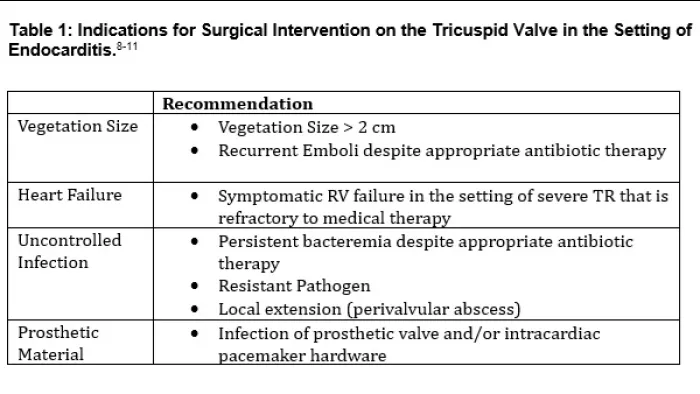
The ongoing opioid crisis has led to a marked increase in tricuspid valve endocarditis (TVE), particularly among people who inject drugs (PWID). This trend presents cardiac surgeons with complex clinical and psychosocial challenges, as patients often face overlapping issues—including infection, addiction, and social instability. These factors complicate surgical decision-making and underscore the need for comprehensive, multidisciplinary approaches to care.
To address the lack of clear surgical guidance and the unique challenges associated with TVE in PWID, the Society of Thoracic Surgeons (STS) convened a multidisciplinary panel to develop expert consensus statements focused on clinical decision-making in this high-risk population.
“Unlike left-sided endocarditis, TVE lacks definitive data to guide surgical timing and intervention strategies,” said Joshua Goldberg, MD, of Weill Cornell Medicine, who chaired the task force that produced the document. “This consensus document represents an important step forward, organizing expert recommendations into key categories that reflect the multifaceted clinical challenges encountered in managing PWID with TVE. Each group of statements addresses specific, real-world dilemmas faced by the multidisciplinary care team.”
The eight core categories outlined in the document include:
Vegetation size
Influence of microbial organism on surgical decisions
Management of persistent bacteremia and timing of antibiotics
Prosthetic valve infection
Decisions around valve removal, repair, or replacement
Prosthetic type selection
Use of emerging technologies such as transcatheter debulking
Ethical challenges of recurrent disease in the context of substance use
A Thorough, Multidisciplinary Approach to Consensus Building
The STS writing group employed a rigorous, evidence-based methodology to develop the consensus statements, incorporating a comprehensive literature review and a modified Delphi process. The evidence review was guided by PICO Framework (Patients/Population, Intervention, Comparison/Control, Outcome)-formatted questions, ensuring a structured and focused appraisal of the data. Consensus statements were established in the first round of voting, with a minimum threshold of 75% agreement required from a multidisciplinary panel that included cardiac surgeons and infectious disease specialists
Navigating Complex Decisions in Endocarditis
“First, surgeons and treatment teams must always remember that tricuspid endocarditis in the setting of injection drug use is a symptom and sign of the disease of addiction. Effective care requires addressing both the infection and the underlying pathology of addiction,” said Dr. Goldberg. “Second, published surgical indications for tricuspid valve surgery are largely extrapolated from data derived from studies on left-sided valve disease. When combined with complex psychosocial factors, the decision to operate can be enigmatic and is best approached through thoughtful, multidisciplinary evaluation.”
A Practical Framework for Attentive, Evidence-Informed Care
Ultimately, this expert consensus provides cardiac surgeons with a practical, evidence-informed framework for managing TVE in PWID. It supports individualized decision-making while promoting standardization in key areas such as vegetation assessment and the use of emerging technologies. Most importantly, it emphasizes the need for compassionate, team-based care that integrates medical, surgical, and psychosocial perspectives. The document serves not only as a clinical tool, but also as a call to action—to treat not just the infection, but the patient as a whole.
In addition to offering clinical guidance, the consensus highlights critical knowledge gaps that demand further investigation. “Because published surgical indications are largely extrapolated from studies on left-sided valve disease, the true indications and optimal timing for intervention remain unclear—particularly in the absence of uncontrolled sepsis or right heart failure,” Dr. Goldberg noted. “We also lack a clear understanding of the efficacy and utility of transcatheter therapies, which have seen a dramatic rise in use in recent years.”
“The Society of Thoracic Surgeons applauds the House bipartisan Doctors Caucuses for their leadership in developing the Patients First Act,” said STS President Vinay Badhwar, MD. “STS has worked closely with members of the caucuses throughout this process, and we are encouraged to see several longstanding physician priorities reflected in the legislation.
In particular, we appreciate the inclusion of meaningful reforms to Medicare's budget neutrality policies and provisions based on the Access to Claims Data Act—legislation developed with strong input from STS to improve physicians' access to timely, comprehensive Medicare claims data.
These policies represent important steps toward a more stable and transparent Medicare payment system that better supports physicians and the delivery of high-quality patient care. We look forward to continuing to work with Congress to advance these reforms and strengthen the Medicare program for both patients and physicians."
A discussion on multidisciplinary management of malignant airway obstruction, including preoperative planning, postoperative airway care, and the value of multidisciplinary tumor boards and real-time collaboration.