NEW ORLEANS—January 29, 2026—At the 2026 Society of Thoracic Surgeons (STS) Annual Meeting, investigators will present a late-breaking study focused on surgical aortic valve replacement (SAVR) following prior transcatheter aortic valve replacement (TAVR), a clinical scenario increasingly encountered as TAVR use expands. The analysis draws on data from the STS Adult Cardiac Surgery Database to characterize risk over time and to validate a dedicated STS risk model designed to support decision-making for patients requiring surgery after TAVR.
As the population undergoing mitral valve surgery continues to age, the choice between repair and replacement has taken on new urgency. At the "Masters of the Mitral Valve" session on Thursday, Jan. 29 at 10:10 a.m., Dr. Allen Razavi of Cedars-Sinai Medical Center will address this issue in the Is Degenerative Mitral Valve Repair Superior to Replacement in Patients Aged >65 Years? presentation.
Image
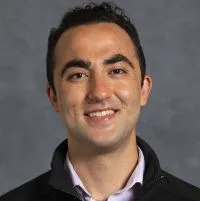
Dr. Allen Razavi
Drawing from a large national cohort within the Society of Thoracic Surgeons Adult Cardiac Surgery Database linked with Medicare data, Dr. Razavi and his team compared long-term outcomes for patients aged 65 and older who underwent mitral valve repair with those who received mitral valve replacement. Their objective was to evaluate differences in survival, major complications, and the need for future mitral valve interventions across treatment strategies.
The study found that mitral repair was associated with significantly improved long-term survival compared with replacement, with benefits persisting across much of the older age spectrum. Patients who underwent repair also experienced lower rates of heart failure readmission, stroke, and major bleeding. While overall reintervention rates were similar between groups, repair patients tended to require earlier surgical reintervention, whereas replacement patients were more likely to undergo late transcatheter procedures.
Dr. Razavi will present findings showing how evolving treatment options and advances in repair techniques prompted the team to reassess outcomes in this population. The growth of transcatheter mitral therapies and improvements in surgical durability have heightened the need to revisit traditional assumptions about when repair should be favored over replacement.
The Richard E. Clark Memorial Paper on day one of STS 2026, Optimal Management for Moderate Aortic Stenosis at the Time of Coronary Artery Bypass Grafting, will be featured during the “Optimizing AVR: Aiming for Perfection” session on Thursday, Jan. 29, at 11:00 a.m. In this presentation, Pey-Jen Yu, MD, of Northwell Health, will explore how best to manage moderate aortic stenosis (AS) in patients undergoing coronary artery bypass grafting (CABG), a question that has grown increasingly important as transcatheter approaches continue to reshape treatment pathways.
Image
Dr. Pey-Jen Yu
Drawing from a large cohort in the Society of Thoracic Surgeons Adult Cardiac Surgery Database (ACSD), linked with national inpatient records, Dr. Yu and colleagues compared outcomes for patients who had isolated CABG versus those who received CABG combined with aortic valve replacement (AVR). The goal was to understand both the immediate risks and the longer-term implications of addressing—or deferring—valve intervention in patients with moderate AS.
The study found that patients undergoing CABG alone experienced slightly lower operative risk, but they were more likely to require later aortic valve intervention and were at increased risk for readmission related to heart failure. Meanwhile, those who underwent concomitant AVR faced a higher initial risk but significantly lower likelihood of needing future valve procedures. Importantly, mid-term survival was similar between the two groups.
In her presentation, Dr. Yu will highlight how the rapid expansion of transcatheter valve therapies served as a key motivation for this work, prompting the team to revisit longstanding assumptions about when to intervene on a moderately stenotic valve during open-heart surgery.
During this webinar, an expert panel will focus on different methods of cannulation including: open vs. percutaneous cannulation; perfusion strategies (including when bicaval cannulation is needed); and examination of different methods of myocardial protection including transthoracic aortic cross-clamping and endo-balloon. The session is relevant for cardiac surgeons and trainees at all experience levels, as well as members of robotic cardiac teams interested in understanding basic techniques relevant to robotic cardiac surgery and advanced methods used in more complex scenarios.
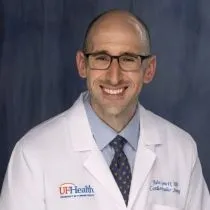
New findings slated for presentation at the 2026 Society of Thoracic Surgeons (STS) Annual Meeting suggests that aortic hemiarch reconstruction provides outcomes comparable to more complex extended arch reconstruction in patients over age 65 with acute type A aortic dissection (ATAAD). John Spratt, MD, clinical assistant professor of thoracic and cardiovascular surgery at University of Florida Health, will present Extended Arch Reconstruction for Acute Type A Dissection Does Not Impact Long-Term Survival or Reoperation in Patients Over Age 65: An STS-CMS Longitudinal Analysis during Sunday’s 11:15 a.m. adult cardiac session, “Tips & Tricks to Get Through Any Dissection.”
Image
Dr. John Spratt
The study used a risk-adjusted analysis of patients from the STS Adult Cardiac Surgery Database, which includes millions of adult cardiac surgery records. Patients underwent surgery at U.S. hospitals over several years, with most receiving aortic hemiarch reconstruction and the remainder undergoing extended arch reconstruction. Researchers evaluated postoperative mortality, stroke, and the need for reintervention for aortic disease and found no significant differences in these outcomes among patients ages 65 and older.
Extended arch reconstruction is a more complex operation that includes replacement of the aortic valve and repair of the ascending aorta, aortic arch, and the major arteries branching from the arch. Hemiarch reconstruction, by comparison, involves replacement of the aortic valve and repair of the ascending aorta and the underside of the aortic arch. Because aortic dissections most commonly affect older adults and require emergency surgery, surgeons must weigh the benefits of a more extensive repair against increased operative time, longer heart-lung bypass duration, and greater neurologic risk—factors that older patients often tolerate less well than younger individuals.
“You have to balance what a patient may need on paper, compared with what their overall risk profile is,” says Dr. Spratt. “The majority of patients age 65 and older will be fine with hemiarch reconstruction and have the same outcomes as they would with a higher-risk procedure.”
A world-class, international event that will explore the latest developments and best practices in coronary artery disease, congenital heart disease, thoracic aortic disease, atrial fibrillation, and the surgical management of heart failure
A cardiothoracic webinar in collaboration with The Society for Heart Failure & Transplantation and The Indian Association of Cardiovascular-Thoracic Surgeon
In this webinar, a diverse panel of surgeons from Latin America and the United States will analyze in a multidisciplinary manner the surgical, physiological, and life-support challenges in the management of the neonate with complex congenital heart disease. The panel will emphasize intraoperative decision-making and early postoperative hemodynamic and respiratory management, including the role of neonatal ECMO as a rescue strategy and bridge to stability.