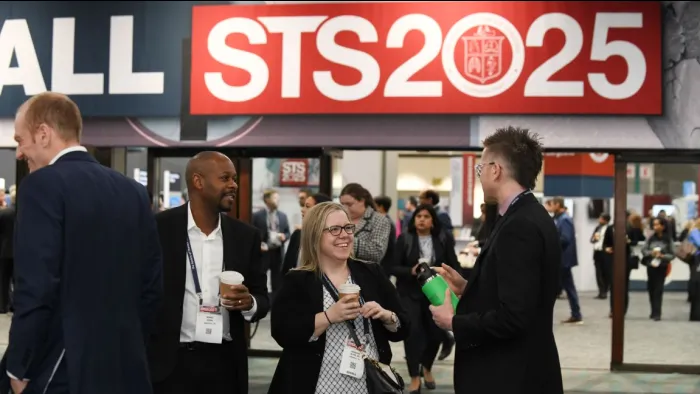
Cardiothoracic professionals from around the world gathered at the 61st Annual Meeting of The Society of Thoracic Surgeons (STS) in Los Angeles, held January 24-26, 2025.
As the premier global event for cardiothoracic surgeons, the meeting drew more than 2,000 attendees and featured more than 80 educational sessions. Participants experienced groundbreaking discoveries, hands-on demonstrations of advanced techniques, and cutting-edge technological innovations from industry leaders.
Pre-conference Sessions Enhanced the Educational Experience
STS offered three concurrent half-day programs on Thursday, Jan. 23. In the Lung Cancer: Clinical Trials Meet Clinical Practice session on early-stage and locally advanced non-small cell lung cancer, attendees received a comprehensive overview of recent diagnostic breakthroughs and key clinical trials through interactive discussions, debates, and case-based tumor board sessions. During the Aortic Universe: From Birth to Adulthood program, participants gained invaluable insights into diagnosing, treating, and managing aortic conditions across all age groups through detailed surgical videos and case-based presentations. The third session, The STS APP Conference — Redesigning the Future Together, focused on innovative approaches to elevate the role of advanced practice providers in cardiothoracic surgery. It highlighted strategies for enhancing clinical management, fostering professional success, and cultivating leadership within the field.
Adult Cardiac Surgery Sessions
Among the Adult Cardiac Surgery Sessions presented was a late-breaking study that revealed mechanical aortic valve replacements provide significant long-term survival benefits for patients aged 60 and younger, compared to bioprosthetic valves. The J. Maxwell Chamberlain Memorial Paper recently explored the comparative outcomes of ViV-TAVR versus redo-SAVR for patients with degenerated surgical bioprosthetic valves, highlighting the growing preference for ViV-TAVR due to its reduced surgical risk. Other sessions examined the risk of reoperation for both procedures, focusing on contributing factors such as mitral or tricuspid valve disease, advancements in cardiac surgery, new approaches to heart failure treatment, and innovations in structural heart interventions.
General Thoracic Surgery Sessions
The General Thoracic sessions showcased groundbreaking advancements in the treatment of lung and esophageal cancers, emphasizing developments shaping the future of thoracic cancer care. The Clark Paper compared the survival outcomes of patients with non-small cell lung cancer who underwent lobectomy versus sublobar resection, focusing on the applicability of previous findings to a broader patient population. The J. Maxwell Chamberlain Memorial Paper examined the effectiveness of current lung cancer screening criteria and explored potential changes to improve them. Other areas explored included the extent of resection and quality metrics in lung cancer care, multimodal treatment of pleural mesothelioma after the MARS2 trial, and the future of lung cancer screening.
Congenital Heart Surgery Sessions
Presentations highlighted cutting-edge research and innovative approaches in the field of congenital heart surgery. The James S. Tweddell Memorial Paper focused on the relationship between hospital volume and patient outcomes for Norwood procedures. Another session explored the impact of specific factors on patient mortality in congenital heart surgery, demonstrating how large databases help identify potential predictors beyond traditional risk factors. Additional discussions included navigating congenital heart disease in premature newborns, challenges in clinical studies, and an analysis of long-term outcomes following the Ross Procedure.
Perioperative and Critical Care Sessions
The J. Maxwell Chamberlain Paper examined the impact of socioeconomic factors on the development of cardiac allograft vasculopathy (CAV) after heart transplantation, particularly in patients from disadvantaged backgrounds who face higher risks and poorer outcomes. Sessions also included a presentation on a newly developed risk model for predicting 90-day mortality after durable left ventricular assist device (dLVAD) implantation, based on real-world data to aid in patient selection and care improvement. Additional topics included structuring novel teams to improve cardiac emergency outcomes, controversies in anticoagulation and HIT after cardiac surgery, the changing landscape of heart and lung transplantation, and optimizing patient safety to enhance recovery after cardiac surgery.
Honoring Exceptional Women CT Surgeons
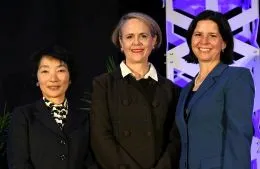
More than 240 attendees gathered for the third annual Nina Starr Braunwald Extraordinary Women in Cardiothoracic Surgery Awards breakfast to celebrate women cardiothoracic surgeons who have exhibited outstanding clinical expertise and made significant contributions to the field. This year’s recipients were Jessica Donington, MD, UChicago Medicine; Stephanie Fuller, MD, Children’s Hospital of Philadelphia; and Aya Saito, MD, Yokohama City University.
Trailblazing Women Inspire at STS 2025
At STS 2025, attendees were captivated by three influential women showcasing excellence in their respective professions.
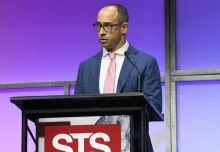
STS President Jennifer C. Romano, MD, MS, made history as the first woman surgeon to deliver the Presidential Address. In her speech, she reflected on her career journey, shared personal anecdotes, and recognized significant milestones in her professional life.
The inaugural Nina Starr Braunwald Lecture was delivered by Jennifer Doudna, PhD, a Nobel Prize-winning biochemist who co-discovered CRISPR-Cas9, a groundbreaking advancement in genetics and molecular biology. She shared her journey from scientific discovery to global impact, highlighting how innovation can shape the future of medicine.
Ami Vitale, an award-winning photojournalist and filmmaker, gave the Vivien Thomas Lecture. During her talk, she shared impactful stories that highlighted healthcare, income, and housing disparities. Vitale stressed the importance of social responsibility and initiated meaningful discussions about caring for both people and the planet.
Hands-On Skill Building for Surgeons at All Levels
STS 2025 offered practical courses on various surgical procedures, providing an engaging and immersive learning experience for residents, early-career surgeons, and any surgeons seeking to enhance their skills. The topics included aortic annular enlargement, TEVAR techniques for aneurysms and dissections, mitral valve repair, complex central airway reconstruction, and the Ross procedure.
The Return of The Hub
For the second consecutive year, The Hub served as the focal point for early career surgeons, medical students, residents, and fellowship trainees. The Hub’s lounge area offered a variety of engaging sessions, including the White Coat Investor Talk, Mock Oral Interviews, Job Interview Preparation, Early Career Surgeon Roundtable Discussions, a Trainee Symposium with a luncheon, and more.
Attendees also enjoyed creative activities in The Hub, such as the collaborative mural project “Splashes of Hope,” where participants contributed their creativity to artwork that will be donated to a local children's hospital. For those eager to capture memorable moments, the Selfie Station offered a fun and interactive backdrop perfect for sharing on social media. Additionally, a scavenger hunt inspired attendees to engage in challenges via the Annual Meeting app, with opportunities to win prizes.
Cutting-Edge Tools, Technologies, and Interactive Podcast Sessions
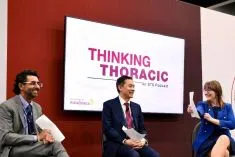
The STS Annual Meeting exhibit hall featured more than 115 exhibitors showcasing the latest tools and technologies for surgical practice, along with live, hands-on product demonstrations. Industry symposia offered insights into emerging techniques and interventions. Two exhibit hall theaters provided attendees with the opportunity to experience live Thinking Thoracic and Same Surgeon, Different Light podcast shows, interactive industry presentations, and the CT Surgery Resident Showdown.
Annual Meeting Online Offers Continued Learning Experience
STS 2025 registrants receive complimentary access to Annual Meeting Online, where they can revisit presentations and recordings of missed sessions and earn additional CME credit. Annual Meeting Online is available for purchase at a significant discount for STS Members who did not attend, and access is free to all Resident/Fellow and Medical Student Members. Visit STS.org/AMonline to purchase.