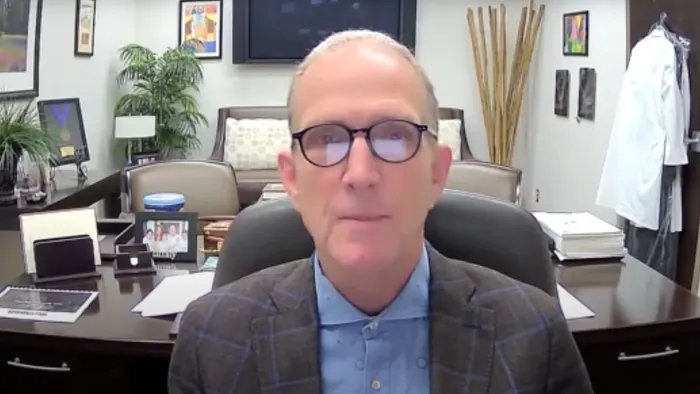
For patients to receive the maximal benefit after CABG and reduce the risk of major adverse events, adherence to post-discharge medications is essential. In this episode of the 8 in 8 Series, the presenters examine the data for post-op medication prescribing guidelines, including aspirin, statins, beta blockers, and more.

Presenters:
Subhasis Chatterjee, MD
Baylor College of Medicine

Duration
10 min.
10 guidelines to consider as a thoracic surgery trainee in the Intensive Care Unit.
Duration
7 min.

Hypoxemia during veno-venous (VV) extracorporeal membrane oxygenation (ECMO) mandates recognition and therapeutic management.  This STS 8 in 8 video identifies the basis of hypoxemia during VV-ECMO support, such as cannula recirculation and shunted blood. Viewers will also learn remediation management strategies.

Presenters:
Cory M. Alwardt, PhD, CCP
Mayo Clinic Arizona 

Rita K. Milewski, MD, PhD, MSEd
Yale University
Duration
9 min.

In this May 2022 message, STS President John H. Calhoon, MD, details the STS Leadership Institute and the importance of supporting future leaders, how the Society is evolving its programs and services, the long-awaited return of live education, and the renewed focus on developing early career physicians.

Opportunities for professional development and career growth for advanced practice providers, including nurse practitioners and physician assistants.
Duration
9 min.
An overview of fundamental concepts, applications, and management of post-cardiotomy temporary epicardial pacing in the ICU setting.
Duration
7 min.

What is reimbursement? What is a salary? What is compensation? These terms are not interchangeable and there is no standard type of employment arrangement for surgeons. In fact, depending on the reimbursement model, the surgeon may not even have a salary. This video introduces the basics of surgeon salary and compensation, while also detailing two types of reimbursement models: one for an academic practice and another for a private practice. In addition, important questions about reimbursement that cardiothoracic surgeons should consider are shared. 

Duration
8 min.

Although bioprosthetic surgical aortic valve replacement (bio-SAVR) is generally well-tolerated, patients are thought to be at increased risk of thromboembolism for up to 90 days following bio-SAVR, supporting the current guidelines recommending the use of an anticoagulation regimen for at least the first 3 months following bio-SAVR.  This video reviews the current guidelines, literature, and controversy regarding the topic of anticoagulation in bio-SAVR patients. 

Duration
8 min.

Drs. Hayanga and Sanchez explore some of the differences and evidence behind the choice of tracheostomy in ECMO patients.

Presenters:
J. W. Awori Hayanga, MD, MPH
West Virginia University, Dept of Cardiovascular & Thoracic Surgery

Pablo G. Sanchez, MD, PhD
University of Maryland

Duration
9 min.